
|
|
|
|
|
|
Boomwackers have been widely successful as a very affordable and useable set of instruments for Elementary music. If you are looking for a different take on the boomwacker try ‘Rhythm Cups. They look quite interesting and would be very portable for teachers having to move from school to school frequently. 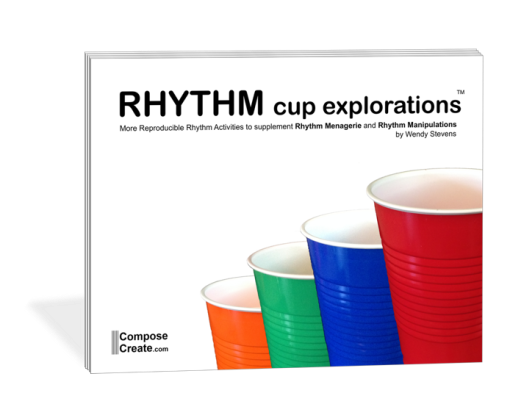 ‘.
‘.
StaffPad is a wonderful looking new music notation application for Windows. Unfortunately it is not available for Apple. Although I haven’t tried it out since I am an Apple guy it sure does look incredible. So clean and quick. You can notate your ideas before forgetting them! It cost a modest US$69.95 Check it out at StaffPad.net
 Looking for a fun activity for your music class? How about getting students trying out some online Mixing and DJing using the FREE Online Virtual DJ Mixer PartyCloud. Students can present their favorite songs. Advanced classes might delve into the world of mixing different genres together. Once you get the hang of it you realize just how creative this process can be.
Google has just released a wonderful online site that allows you to visit the famous Abbey Road recording studios where the Beatles were so active. You can visit the 3 main studios and even learn about mixing and mastering recordings. Give it a go and have some fun! 
Part of my school music budget is eaten up every year for all the batteries we use in our auditorium in wireless microphones. I am very hopeful a new gizmo called ‘Batteriser’ will change all that. This very cool invention will apparently extend reusable battery life by a boasted 800% and should be available this fall according to a recent article in MacWorld online magazine. Check it out. For approx. $2.50 you can buy the ‘Batteriser’ that will hopefully make a difference.


There has just started an new music composition contest that would be a great chance for IB Music students and others around the world to create new music for their course work that focuses on specific world instruments and new forms of music.

“International Center for Japanese Culture“ of ICJC for short and Yokohama International School has started an exciting new competition to promote the creation of new music compositions written for a traditional Japanese instrument and one Western instrument.
The composition submitted must be written for two to five performers including up to three 13-string kotos and one 17-string bass koto. One western instrument must be included in the composition (flute, clarinet, violin or cello).
Composition length should be between 6 to 12 minutes and scored using western music notation.
The goal of this mission is to:
Cash prizes will be awarded to the top two compositions. First place is worth ¥500,000 (approx. US$5,000) and Second place is worth ¥100,000 (approx. US$1,000) Additional awards are: Performances in Japan and the USA, Composer Invitation to Yokohama Japan, and Music Publication of the work.
The deadline for submissions is Sunday, May 31, 2015 (6:00 local time in Japan)
One of my music students found a great FREE online application today while trying to make a mashup. They wanted to find the tempo bpm of a song and the key it was in, so searched for an app and found HookTheory.com This application will do that plus a whole lot more. They have a beginner music composition music theory ibook for purchase at $14.95 as well as two wonderful online applications that are totally FREE. This interface is slick and easy to use and it will even create a notated score using western notation and even tabs if needed. Composing is simple and fun. Everything is colour coded and the application will even suggest chords to go with your melody. Checkout THEORY TAB for composing. The snap shot below gives you an idea of how everything look. Pretty straight ahead and if you have trouble figuring things out there is an online manual with video tutorials. CHECK IT OUT YOURSELF ONLINE.


If you use YouTubes in the classroom and want to put one on continuous repeat mode just change the URL. I am teaching a film soundtrack unit and asking students to create their own soundtrack for a film. To practice as a group I was replaying the YouTube without sound and getting students to try out different concepts. One of my students suggested I use an easy trick to put the YouTube on loop.
Here is a screen shot of the URL on the original YouTube page.

All you have to do is replace the word “tube” of “youtube” in the URL with the word “repeat” so it looks like this and you will be taken to another page where when played the YouTube repeats itself in a loop. Pretty easy and useful!

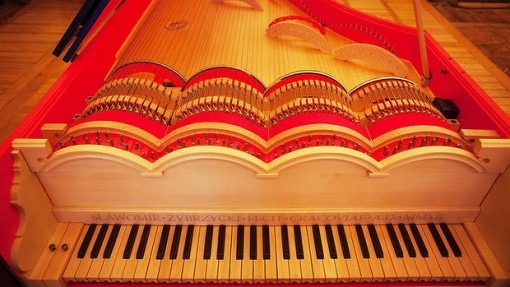
What a cool instrument. The viola organista. Leonardo Da Vinci had many talents and was given a large dose of creativity. One of his inventions was just created for the first time. A new instrument called a “viola organista” that is a cross between a piano, a violin, and listen for yourself. Interesting article from “the Age Entertainment” Nov. 18, 2013 Read more.
Here are some site connections and information I have found to be helpful for teaching music.
 Technologies and Resources for Music Educators


 Music Tech for Teachers